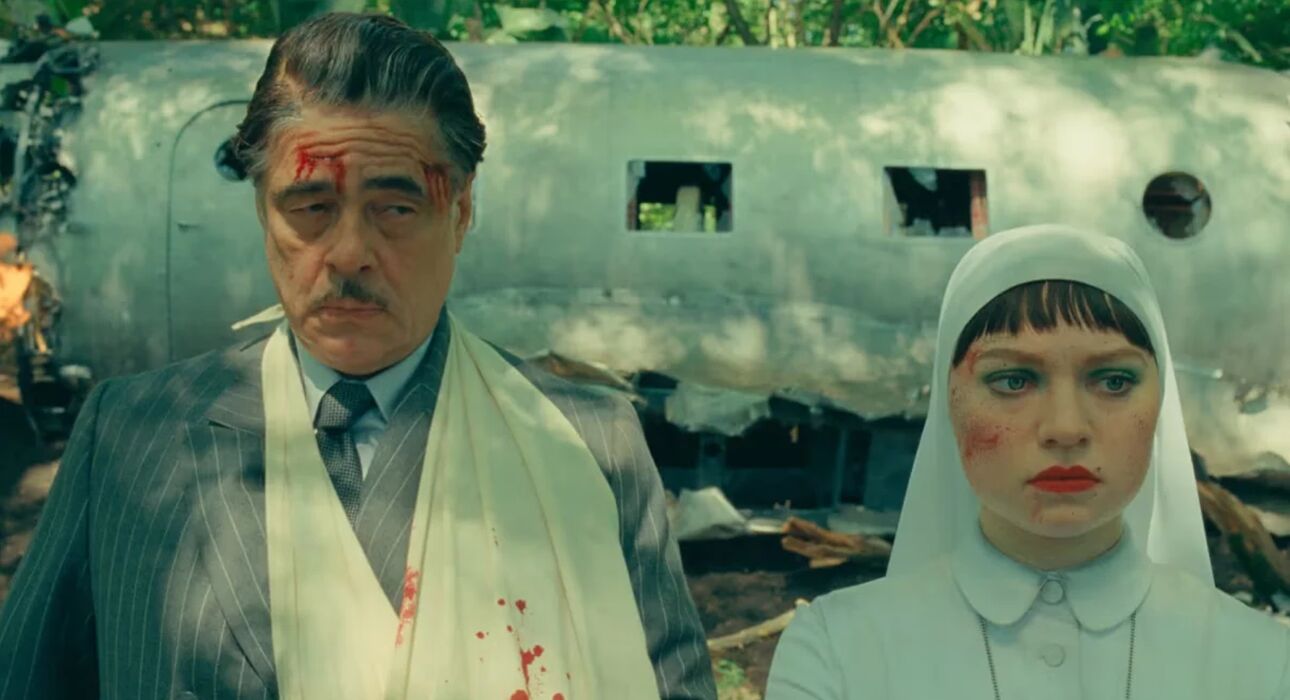
As the crate opened on Pierre-Auguste Renoir’s Enfant assis en robe bleue the bedroom set seemed to inhale. Varnish caught the key light and the crew instinctively lowered their voices. Knowing that Greta Garbo once lived with the painting lent an almost biographical weight to the scene: actor Benicio Del Toro straightened his posture and the cinematographer dialed down fill lights to preserve every brushstroke.
Curator Jasper Sharp had just three months to borrow that Renoir and René Magritte’s The Equator along with a handful of Old Masters from collectors near Studio Babelsberg. His first emails were met with polite disbelief, yet personal relationships and Anderson’s reputation persuaded lenders who had never even heard of the director. The result was a palazzo set dressed with objects that could sit comfortably inside a national museum.
Once the works arrived the soundstage turned into a temporary gallery. A conservator carried a lux meter between takes, a registrar logged every movement, and the paintings rested in a fenced-off, darkened corner when cameras were idle. The Magritte spent one day on set, the Renoir one night, and any spike in temperature halted filming until conditions stabilized.
From an art advisory's perspective the numbers are daunting. Insurance on an eight-figure Renoir accrues by the hour, couriers travel business-class with the art, and crates must meet museum-grade specifications. Shipping was kept local to trim costs, and scenes were scheduled so the paintings did not exceed safe exposure limits. The fee line was painful but the marketing value of proclaiming “Yes, that is a real masterpiece” proved irresistible.
The creative dividend showed immediately. Actors gravitated to the canvases between takes, studying pigment as if it might unlock character secrets. Sharp described each work as a silent line of dialogue and Anderson has said audiences may not recognize authenticity consciously yet still feel its aura.
Authenticity resonates beyond the screen. Last November a Magritte from the “Empire of Light” series reached $121.16 million at Christie’s, reminding collectors that blue-chip art is not just a visual prop but a financial statement. In a market chasing tangible assets, Anderson’s gamble looks prescient.
Film sets rarely host works this precious, yet when narrative demands the gravitas only a real masterwork can deliver, the risk-to-reward equation shifts. For the right story and the right budget, borrowing a masterpiece can be the most cost-effective special effect in cinema.
Looking for access to historical masterworks?
We offer end‑to‑end expertise - acquisitions, legacy planning, and collection development - so every artwork adds cultural depth and financial strength. Let's shape your collecting future.Book your consultation now!